Why this blog is called "Gallimaufry".

gal-uh-MAW-free\, noun.

Originally meaning "a hash of various kinds of meats," "gallimaufry" comes from French galimafrée; in Old French, from the word galer, "to rejoice, to make merry"; in old English: gala + mafrer: "to eat much," and from Medieval Dutch maffelen: "to open one's mouth wide."

It's also a dish made by hashing up odds and ends of food; a heterogeneous mixture; a hodge-podge; a ragout; a confused jumble; a ridiculous medley; a promiscuous (!) assemblage of persons.

Those of you who know me, will, I’m sure, understand how well some of these phrases (barring the "promiscuous" bit!) fit me.

More importantly, this blog is an ode to my love for Shimla. I hope to show you this little town through my eyes. If you don't see too many people in it, forgive me, because I'm a little chary of turning this into a human zoo.

Stop by for a spell, look at my pictures, ask me questions about Shimla, if you wish. I shall try and answer them as best as I can. Let's be friends for a while....

17 May 2007

I like weather rather than climate!

Remarked Steinbeck.
It is impossible to live in Shimla and not to mention - or rather, gloat over - its salubrious air. Shimla's British residents were, predictably, fascinated by its weather.
"Like meat, we keep better here [in the hills].", said Emily Eden.

Lord Curzon took the cake. In a speech to the Simla Municipal Committee, in April 1899, he proclaimed that "Simla is in a peculiar sense not merely the official residence of the Viceroy during the hot weather, but his country home. For here he divests himself if not of the cares of office—this is I fear never possible in India—at least of some of the trappings of State; and amid your beautiful mountains he may almost succeed in mistaking himself for an Anglo-Indian Horace retiring from the noise and smoke of Rome to the peace of the Tiburine hills."!


The weather was bound to affect its inhabitants. There was an atmosphere of revelry. The puruit of relaxation was a serious business. Social calls, amateur theatricals at Gaiety Theatre, picnics at Annandale, viceregal dinners, fetes champetre, races and racing balls, occupied residents full time. Shimla was variously defined as the "home of the heaven-born," "the abode of the little tin gods," "a place so overladen with officialdom that it left little room for people seeking a simple summer of leisure". One disgusted soul called it "an English watering-hole gone mad"!

The last word on Shimla must go to an unknown British bureaucrat who remarked that "Delightful as it was, it was not India."

14 May 2007

Gods have nesting instincts too?

Exploring the neighbourhood throws up interesting sights! Here's Shiva, nesting, as it were. It almost felt as though his divine consort, Parvati, had left him to hatch some divine eggs!


He, who is one of the triumvirate of Hindu divinities, namely, Brahma, Vishnu & Mahesh. The three represent one aspect each of the Divine: Brahma is the creator, Vishnu preserves & Mahesh, or Shiva, as he is popularly called, is responsible for destruction which, in turn, represents change. In his avataar as Rudra, Shiva is considered to be the destroyer of evil and sorrow. As Shankara, he is the doer of good. Interestingly, his name "Shiva" also means kind, friendly, gracious, or auspicious. Seems apposite, in a sense.

Back home, in Maharshtra, he is known as Khandoba in Jejuri.
And when you mention the word "Jejuri", you cannot go forth without mentioning at least one of Arun Kolatkar's poems from his book titled "Jejuri":

A SCRATCH
what is god
and what is stone
the dividing line
if it exists
is very thin
at jejuri
and every other stone
is god or his cousin

there is no crop
other than god
and god is harvested here
around the year
and round the clock
out of the bad earth
and the hard rock

that giant hunk of rock
the size of a bedroom
is khandoba's wife turned to stone
the crack that runs across
is the scar from his broadsword
he struck her down with
once in a fit of rage

scratch a rock
and a legend springs

10 May 2007

God Scatters Beauty

God scatters beauty as he scatters flowers
O'er the wide earth, and tells us all are ours.
A hundred lights in every temple burn,
And at each shrine I bend my knee in turn.

Walter Savage Landor


This little temple of unknown age and provenance, is located at the head of the Annandale Valley. Noone ever goes there and noone has ever been seen praying there. But it has a dozens of little coloured threads hanging over its doorway, probably tied there by hopefuls asking the deity for favours.

S likes the place so much she hopes to get married there! More power to her wishes. May Shiva help her find her soulmate...

9 May 2007

I'm in love! I'm all shook up!

Mm.. mm.. oh, oh, yeah, yeah!


Wait. This is no tomfoolery.
Here's what happened. It was a fine Sunday afternoon. The venerable seniors & self were on a ramble along the path you see above.
And this cottage - St. Ninian's - loomed up on the way. I did the only thing I could - I fell in love with it.


Open Letter to My Significant Other, courtesy Thomas Lovell Beddoes:
If there were dreams to sell,
What would you buy?
Some cost a passing bell;
Some a light sigh,
That shakes from Life's fresh crown
Only a rose-leaf down.
If there were dreams to sell,
Merry and sad to tell,
And the crier rang the bell,
What would you buy?
A cottage lone and still,
With bowers nigh,
Shadowy, my woes to still,
Until I die.
Such pearl from Life's fresh crown
Fain would I shake me down.
Were dreams to have at will,
This would best heal my ill,
This would I buy.


And further, dear Vineet, per Wordsworth,
On favoured ground, thy gift, where I might dwell
In neighbourhood with One to me most dear,
That undivided we from year to year
Might work in our high Calling--a bright hope
To which our fancies, mingling, gave free scope
Till checked by some necessities severe.

Just a thought, you know.

28 March 2007

I think I’ll be homesick for you, even in heaven.

Said Beth to Jo in Little Women.

This sentiment comes alive as you walk past Shimla's old bungalows.
Oakville.
Eddleston.
Foswell.
Dixie.
Inverarm.
Chimneys. Mullioned windows. Little gardens with primrose creepers. The old occupants of Shimla's bungalows gave them names that revealed the degree of their owners' homesickness. These houses were meant to be a symbol of their owner's position in the local pecking order, but sometimes unwittingly also said a lot about their personalities and aspirations. For example, Allan Bank was once called the Nunnery since its three female occupants were all single. Rothney Castle gives away its landlord's ambition while Walsingham points to its proprietor's patriotic beliefs! It is clear that Corner House was occupied by someone down to earth!

Name me no names for my disease,
With uninforming breath;

I tell you I am none of these,
But homesick unto death—


21 March 2007

Daffodils / Jonquils / Narcissi


The reason why I'm waxing lyrical over this flower is because, aside of a few sad clumps of candy tuft and a solitary Arum Lily, our garden is pretty much bare of flowers. Spring, this year, seems to be in a "to be or not to be" mode! Cloudy one day, sunny the next... At this rate, how am I to go about planting my favourite flowers?

And, no, I refuse to quote Wordsworth or Herrick when the word "daffodils" is mentioned. That's just too predictable!


Here, instead, are two old favourites:

One is from Shakespeare's "A Winter's Tale"

Daffodils,
That come before the swallow dares, and take
The winds of March with beauty.

The other's by Philip Larkin. When asked if he ever thought about becoming poet laureate, he said "Deprivation is for me what daffodils were for Wordsworth"!

This flower is named after Narcissus. Legend has it that for the Greeks Narcissus stood for vanity and insensitivity. He died, it seems, because he could only love his image at the expense of himself.


To balance to poetic with the prosaic, daffodils or narcissi belong to:

Kingdom: Plantae
Division: Magnoliophyta
Class: Liliopsida
Order: Asparagales
Family: Amaryllidaceae
Genus: Narcissus

My favourite's the golden yellow variety.
Today's post is respectfully dedicated to Ms. S. Chandra, my Botany teacher in Std. VI, Sophia School, Kota.
Bless you, Miss, wherever you are.

13 March 2007

Stormy skies


Shimla saw such glorious weather last evening.... A mad wind, darkening skies all purple and blue and black, an indecisive patter of rain.

All sounds of all changes,
All shadows and lights
On the world’s mountain-ranges
And stream-riven heights,
Whose tongue is the wind’s tongue and language of storm-clouds on earth-shaking nights....


said Swinburne in his poem "Hertha".


This poem echoes in Vedic ruchas (poems), especially the sonorous sounds of "The non-existent was not; the existent was not at that time. The atmosphere was not nor the heavens which are beyond. What was concealed? Where? In whose protection? Was it water? An unfathomable abyss?"

And

"Darkness was hidden by darkness in the beginning. All this was an indistinguishable sea. That which becomes, that which was enveloped by the void, that alone was born through the power of heat".

10 March 2007

My second favourite post office


I shall make a post about my no. 1 favourite soon.
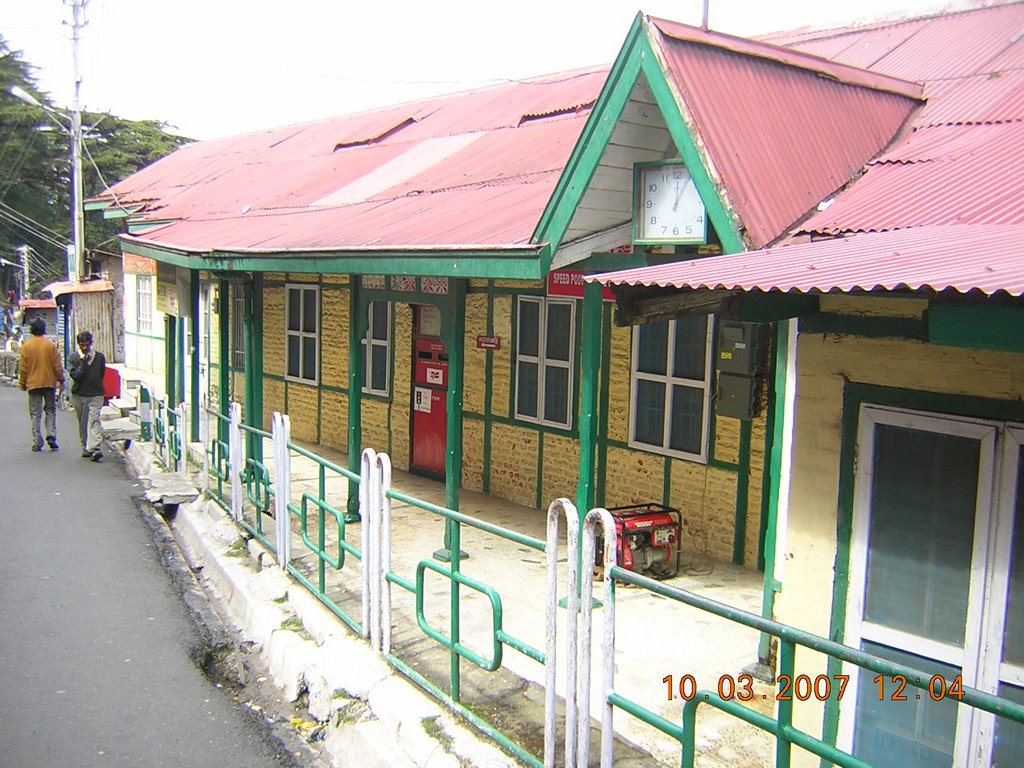
But first, this one, located on the edge of the Mall.
At one time, it actually boasted of ink-wells & little bottles of thick glue, with a little pencil-stub that you used for sticking up your letters. This post office had the unique (to me) distinction of selling *pink* inland letters. Never saw those before I entered this post office & never saw them again anywhere else.

I'm reminded of Christopher Morley's "To a Post-Office Inkwell":

How many humble hearts have dipped
In you, and scrawled their manuscript!
Have shared their secrets, told their cares,
Their curious and quaint affairs!

Your pool of ink, your scratchy pen,
Have moved the lives of unborn men,
And watched young people, breathing hard,
Put Heaven on a postal card.

5 March 2007

Lucky me!

Edwin Arlington Robinson (1869–1935). wrote this about Boston, but I like to apply it to dear old Shimla:
"My northern pines are good enough for me,
But there’s a town my memory uprears—
A town that always like a friend appears,
And always in the sunrise by the sea.
And over it, somehow, there seems to be
A downward flash of something new and fierce,
That ever strives to clear, but never clears
The dimness of a charmed antiquity."


Yup. Gallimaufry is now a resident of her beloved Shimla.
Who'd have thunk...?

4 August 2006

Life is the only way


Life is the only way
to get covered in leaves,
catch your breath on the sand,
rise on wings;

to be a dog,
or stroke its warm fur;

to tell pain
from everything it's not;

to squeeze inside events,
dawdle in views,
to seek the least of all possible mistakes.

An extraordinary chance
to remember for a moment
a conversation held
with the lamp switched off;

and if only once
to stumble upon a stone,
end up soaked in one downpour or another,

mislay your keys in the grass;
and to follow a spark on the wind with your eyes;
and to keep on not knowing something important.

12 July 2006


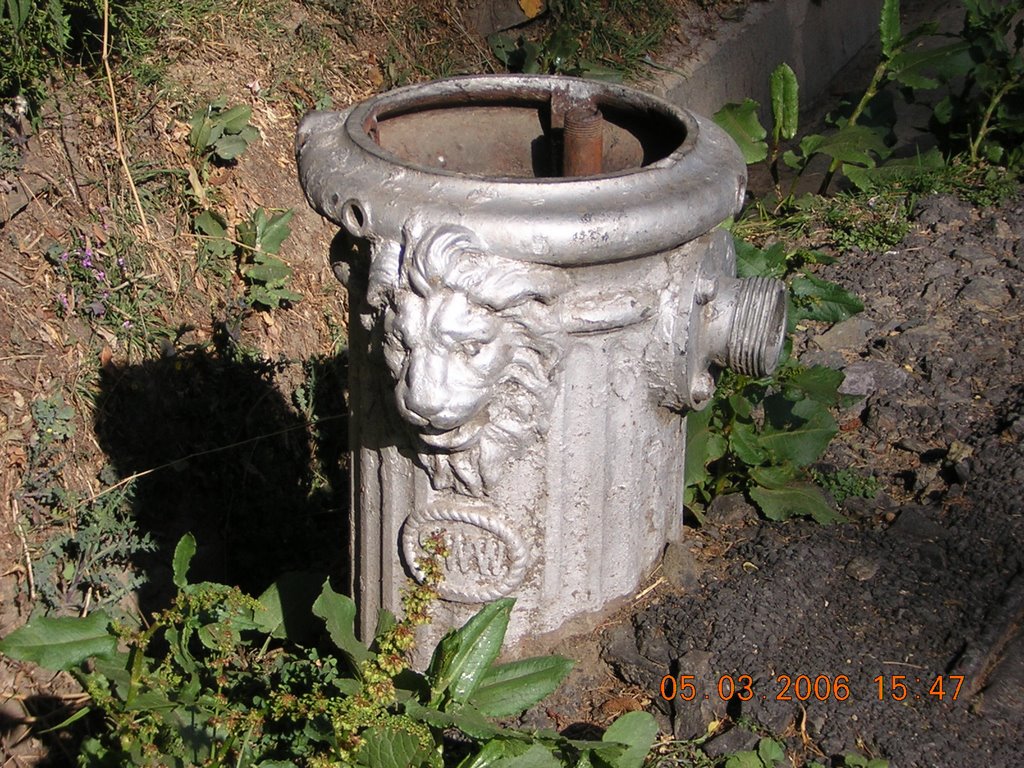
"There is a lion in the way; a lion is in the streets."
Proverbs xxvi. 13.

Go rambling without purpose on a Sunday afternoon & who knows what you will discover by the road-side?

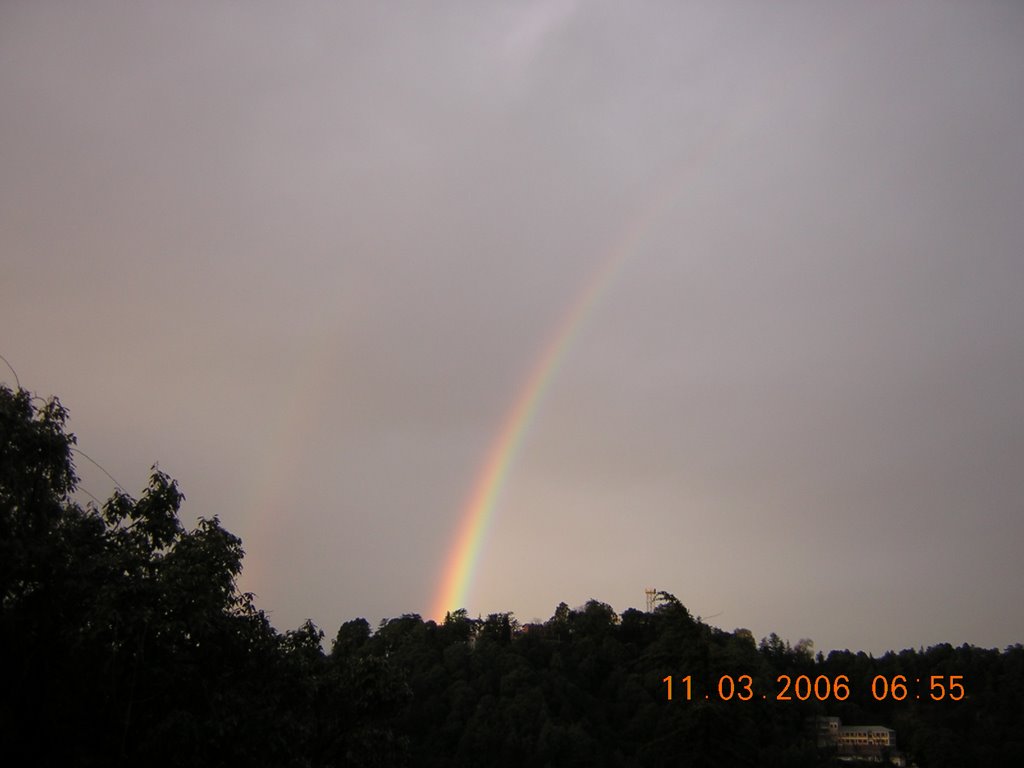
"This Land of Rainbows spanning glens whose walls,
Rock-built, are hung with rainbow-coloured mists--"

By curious coincidence, this poem by Wm. Wordsworth is part of a collection called "Yarrow revisited". The other coincidence is that these two rainbows stretch over a valley called Glen!

8 July 2006

They did things in style back then!!

Browsing old books about Shimla, I found this gem in one by S. J. Duncan sometime ago. It's too priceless for words.
The era is Victorian. The family small: a young mother, three children & their ayah (maid). The journey is complicated: they are moving from Calcutta to Shimla. The distribution of their luggage is as follows:
1st camel load: Two large trunks & two small ones with clothing.
2nd camel load: One large trunk containing children's clothing, plate chest, three bags, one bonnet-box.
3rd camel load: Three boxes of books, one box containing folding chairs light tin box with clothing.
4th camel load: Four cases of stores, four cane chairs, saddle stand & mackintosh sheets.
5th camel load: One chest of drawers, two iron cots(!), tea table, pans for washing up.
6th camel load: Second chest of drawers, screen, lamps, lanterns, hanging wardrobes.
7th camel load: Two boxes containing house-linen, two casks containing ornaments, ice-pails & doormats.
8th camel load: Three casks of crockery, another cask containing ornaments, fitler purdah bamboos, tennis-poles (!).
9th camel load: Hot case, milk safe, baby's tub and stand, sewing machine, fender and irons, water cans, pitchers.
10th camel load: Three boxes containing saddlery, kitchen utensils, carpets.
11th camel load: Two boxes containing drawing room sundries, servants' cots, iron bath (huh?), cheval glass, plate basket.

Travel light, anyone?!

Stations along the Kalka-Shimla railway line

(Strictly for the detail-minded!)
Kalka
Taksal
Gumman
Koti
Jabli
Sonwara
Kasauli Road
Dharaampur
Kumarhatti
Barog
Solan
Kandaghat
Kanoh
Kaithleeghat
Shoghi
Taradevi
Jatogh
Summer Hill
Shimla.

7 July 2006

A Contemplation upon flowers

Not all flowers have souls,
But roses, for they are memories of lovers,
And lilies, their prayers,
Azaleas; who give themselves to the winds,
And irises, beloved of Pindar,
And the pale œnothera,
Incandescent in the twilight,
And many sweet and simple flowers—
Snowdrops and violets,
White and delicately veined—
And all shadowy wind-flowers.
But not tree blossoms,
Which are the breath of Spring,
Nor poppies, splendid and secret,
And sprung from drops of Persian blood,
Nor water-lilies, who have but their dreams,
And float, little worlds of scent and color,
Wrapt in their golden atmosphere.

~ Florence Taber Holt ~

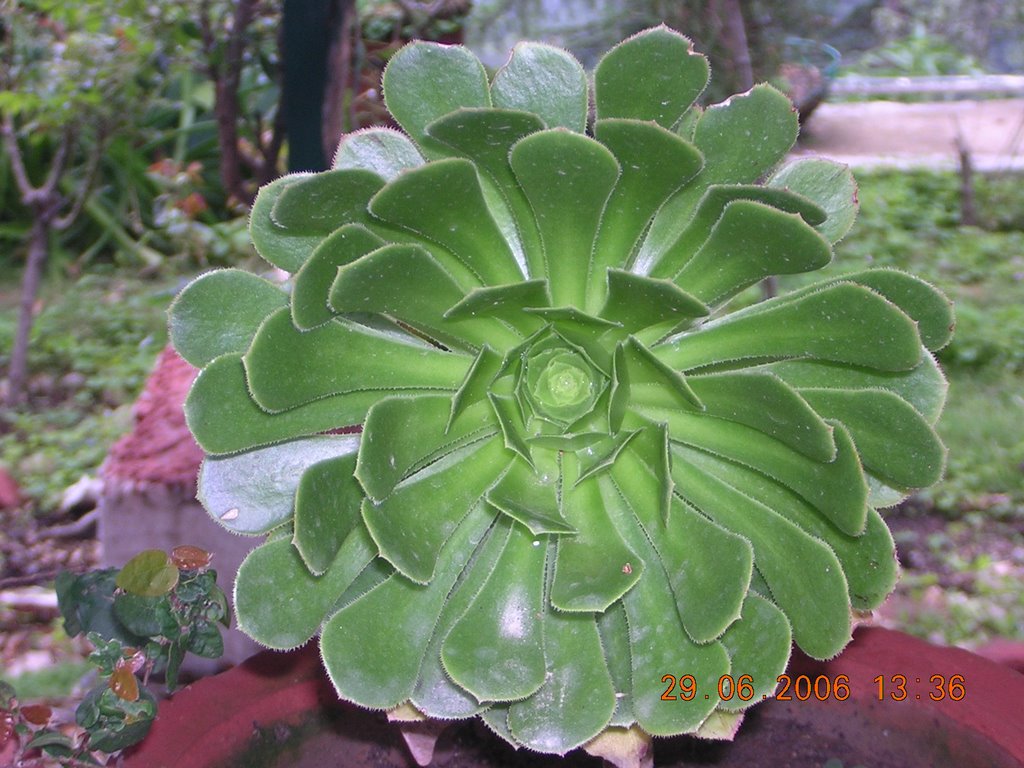
This is a picture of an aeonium. Since I am nt particularly knowledgeable about plant, I'm still undecided as to whether this is an "Aeonium undulatum" or an "Aeonium arboreum". The plant has succulent rosettes of waxy leaves, generally at the end of naked stems.


More of "Yarrow".


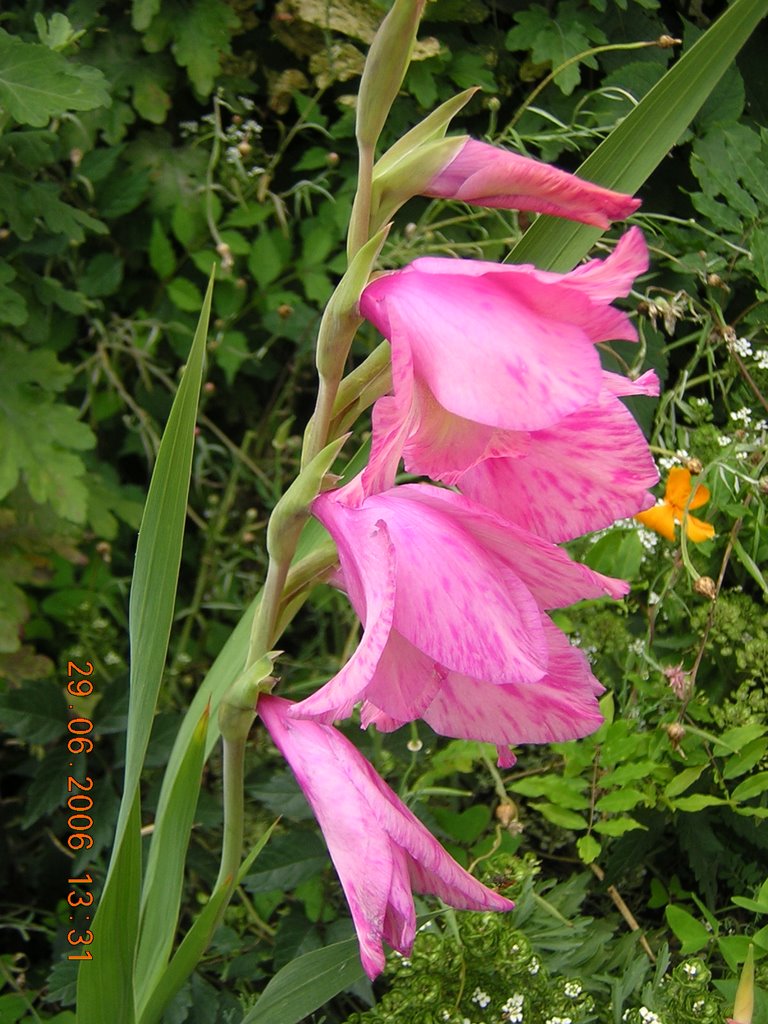
Okay, I know this one - gladiolus!

Gladiolus is a genus of perennial flowering plants which belong to the iris family (Iridaceae). About 10 species are native to India. The long, sword-like leaves look particularly atractive.


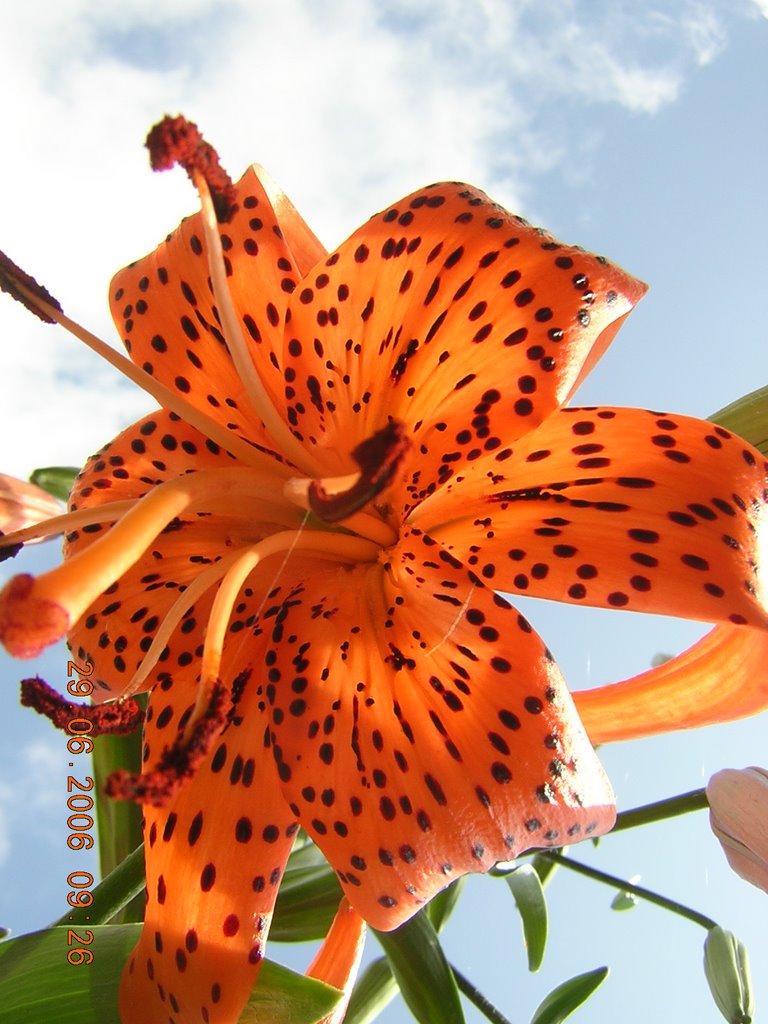
Tiger-lily. Also known as Columbia lily or lilium columbianum. What a stunning plant with its waxy orange leaves and dramatic black speckles!

A school-going friend supplies the following information (TMI?):

Kingdom: Plantae -- Plants
Subkingdom: Tracheobionta -- Vascular plants
Superdivision: Spermatophyta -- Seed plants
Division: Magnoliophyta -- Flowering plants
Class: Liliopsida -- Monocotyledons
Subclass: Liliidae
Order: Liliales
Family: Liliaceae -- Lily family
Genus: Lilium -- lily

Species: lilium columbianum

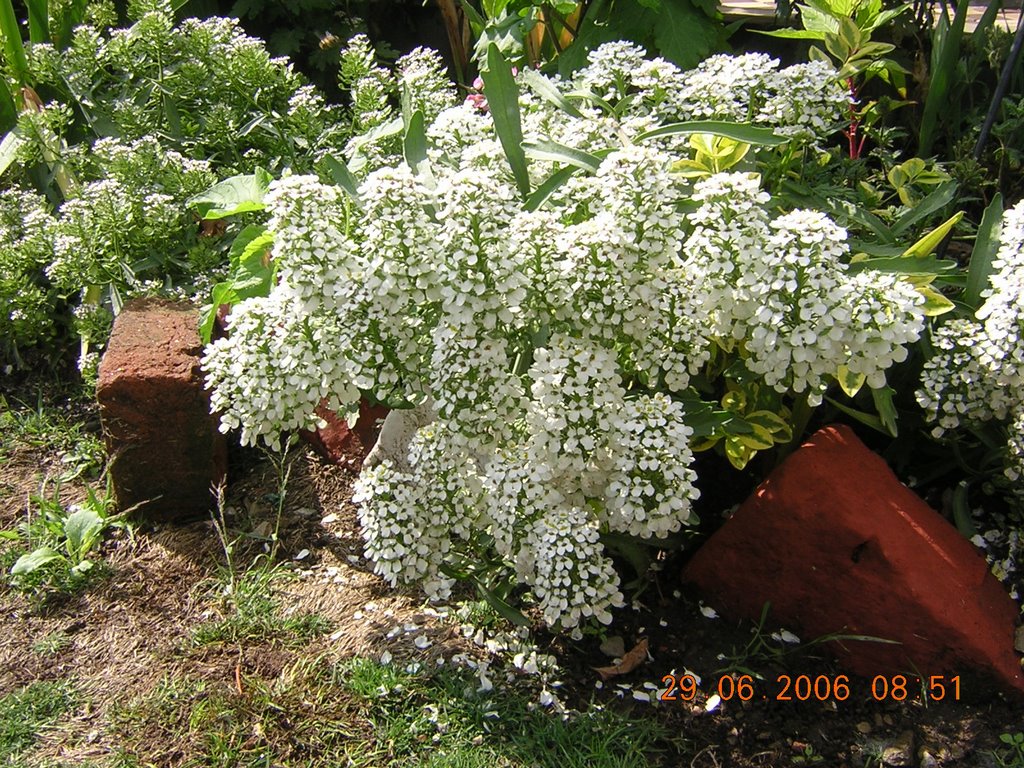
Iberis - Candytuft. This perennial comes into bloom the last part of April and lasts through June in Shimla. In fact, this plant I have photographed was the last of a straggling group. I love its evergreen foliage (not visible here) as it provides a lovely dark backdrop to these delicate flowers. Kungfoo_Kitty helpfully adds here that it also has wonderful medicinal properties.


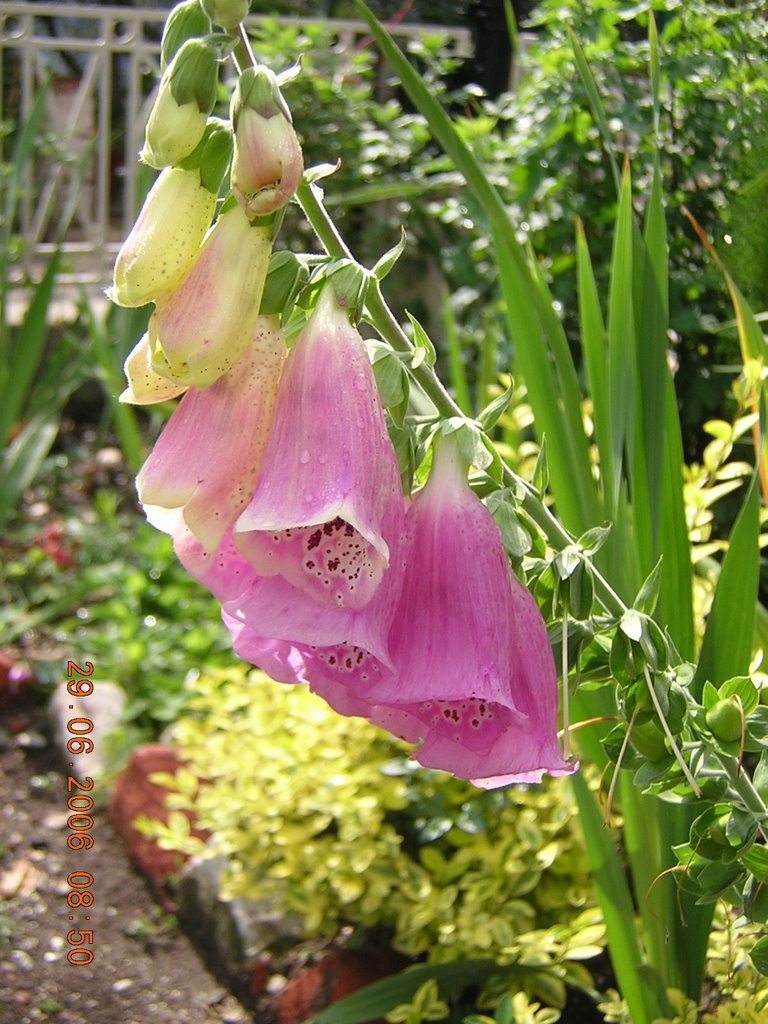
Foxglove is the common name for plants of the Digitalis species. These plants, biennial or perennial, are native to the Mediterranean region, and can reach heights of 1.2 to 2 meters. The primary value of foxglove is medicinal - digitalis, a cardiovascular drug extracted from the leaves, is the most effective drug available for heart failure caused by hypertension or arteriosclerosis.


31 May 2006

Numbers, mere numbers!

In Shimla, there are:
103 tunnels between Kalka & Shimla.
2 little Tibetan monasteries at Sanjauli & Kasumpti.
7 Hills:
- Elysium , where Auckland House school and Longwood, a housing estate, are located.
- Inverarm: You have to huff and puff up a steep little road to reach the State Museum on the Chaura Maidan (which is neither "chaura" nor a "maidan" !). Do look out for Chaura Maidan's tiny and utterly winsome post office at the foot of the hill. The Museum is open between 10 a.m. & 5 p.m. and is closed on Monday and public holidays.
- Jakhoo is Shimla highest peak and is best known for its monkeys & the temple dedicated to Hanuman (the monkey god from the Hindu epic Ramayana. The best way to access this is from the Ridge on foot, but you can also drive up.
- Bantony (the location of the crumbling Grand Hotel.
- Prospect Hill offers a splendid view if you're ready to walk for just 15 minutes beyond the suburb of Boileauganj. The Kamna Devi temple is also located here.
- Summer Hill has to have one of the prettiest little railway stations in India. Trundle down the hill and you may yet chance upon an Arcadian vision!
- Observatory Hill is home to the Viceregal Lodge. Enough said.

30 May 2006

A special word of thanks.

I must thank Maeve for her spontaneous offer to help me identify the various flowers of Shimla. The text explaining the origin and names of the flowers is hers almost in toto. (Call me lazy, but I saw little point in re-inventing the wheel!)
Such is the wonderful world of internet: two complete strangers meet anonymously on a bulletin board & a collaboration happens.

More flowers


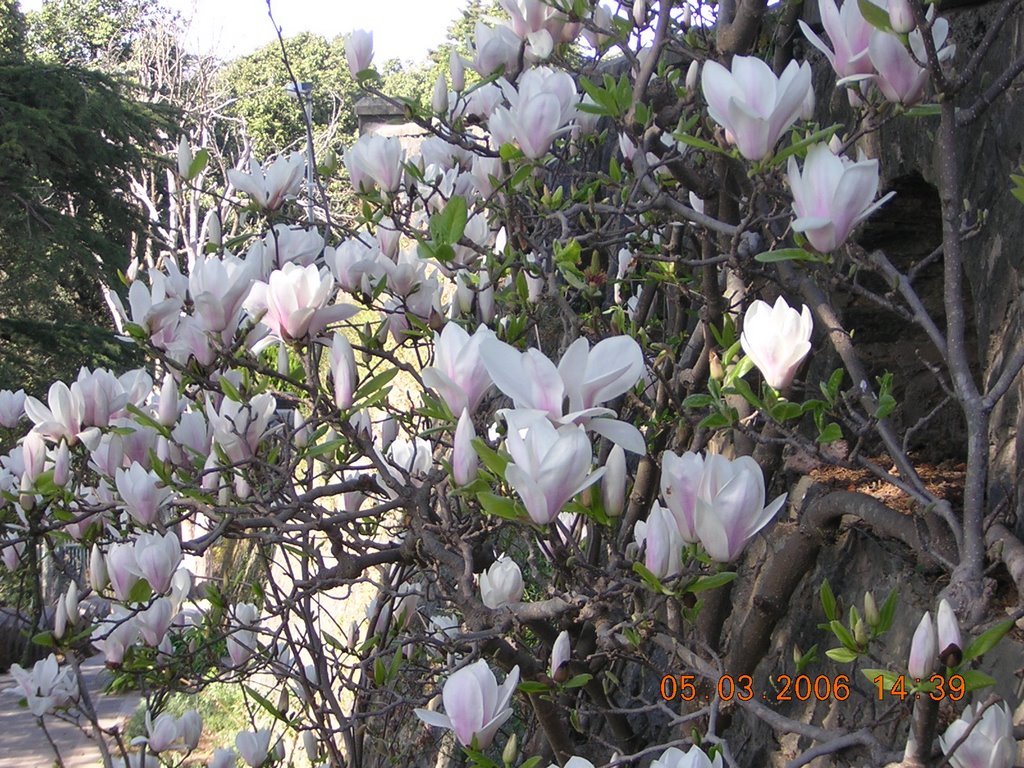
Magnolia. (Magnoliaceae).
A genus of 80 species of hardy evergreen and deciduous flowering trees and shrubs. It contains some of the most spectacular speciment trees and shrubs.
The magnolia shown in this picture may be Magnolia sieboldii, syn. M. parviflora, found in Japan or Korea. Height and spread 10-15 feet. The pendent, bowl-shaped flowers, 3in across, are white with conspicuous claret stamens. OR it could be
Magnolia x soulangiana. Height 10-15 ft; spread 10-18ft. White, chalice-shaped flowers, 5-6in across and stained rose-purple at the base, open in April before the leaves unfurl. Of Japanese origin.


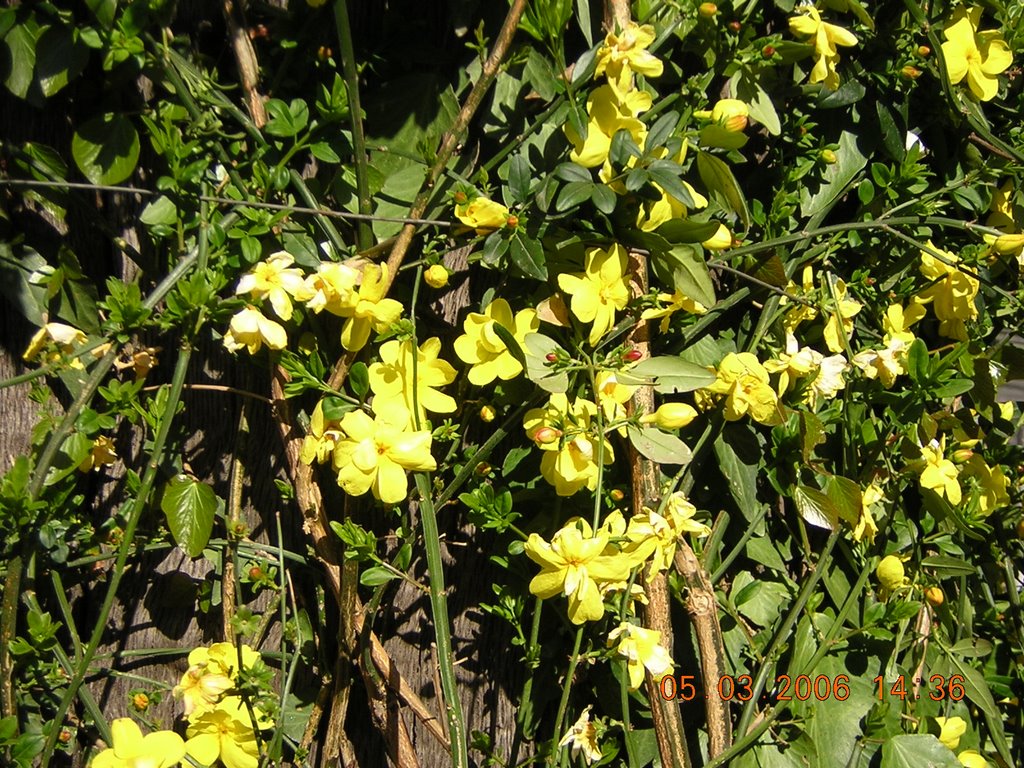
Jasminum. Jasmine (Oleaceae).
A genus of 300 species of tender and hardy, deciduous and evergreen shrubs and climbers. They are suitable as ground cover on rock gardens , for training against walls or fences or for twining over arbours, trellises and pergolas.
Jasmine flowers are tubular, opening out salviform; they are usually borne in terminal and axillary clusters, sometimes forming panicles. Some species are strongly fragrant. The leaves are opposite and in most cases, pinnate.
These varieties are yellow – J. mesnyi, syn. J. primulinum (primrose jasmine). China. Height up to 10 ft and J. nudiflorum (winter-flowering jasmine). China. Height up to 10 ft.
This picture is probably of J. parkeri (N.W. India). Height 8-12 inches (sic). A hardy, dense, hummock-forming evergreen shrub with pinnate leaves. Yellow.


Zantedeschia. (Araceae).
A genus of eight or nine species of rhizomatous, perennial, half-hardy and tender greenhouse(!) plants. The flowers are borne on a spadix at the end of a long stem and surrounded by a large spathe. Forms of Zantedeschia aethiopica may be grown out of doors in mild districts in UK.
This picture is that of an Arum Lily (Zantedeschia aethiopica). From South Africa. A deciduous species with mid to deep green, slightly glossy, arrow-shaped leaves. White spathes, 5-9inches long, surrounding a conspicuous yellow spadix are borne from March to June.


Wisteria (Leguminosae).
A genus of ten species of hardy deciduous climbing shrubs. They are among the most beautiful of all climbing plants and are used to decorate walls, fences, arches, pergolas and trees.
The flower could be either : (1) Wisteria sinensis (Chinese wisteria). Height up to 100ft. This large species is the finest and most popular of the wisterias. The dark to mid-green leaves consist of up to eleven leaflets which makes the species easily distinguishable from (2) Wisteria floribunda. Dense, 8 to 12 inch long racemes of fragrant mauve flowers are freely produced. Wisteria sinensis ’Alba’ has white flowers; Wisteria sinensis ‘Plena’ has double mauve flowers.


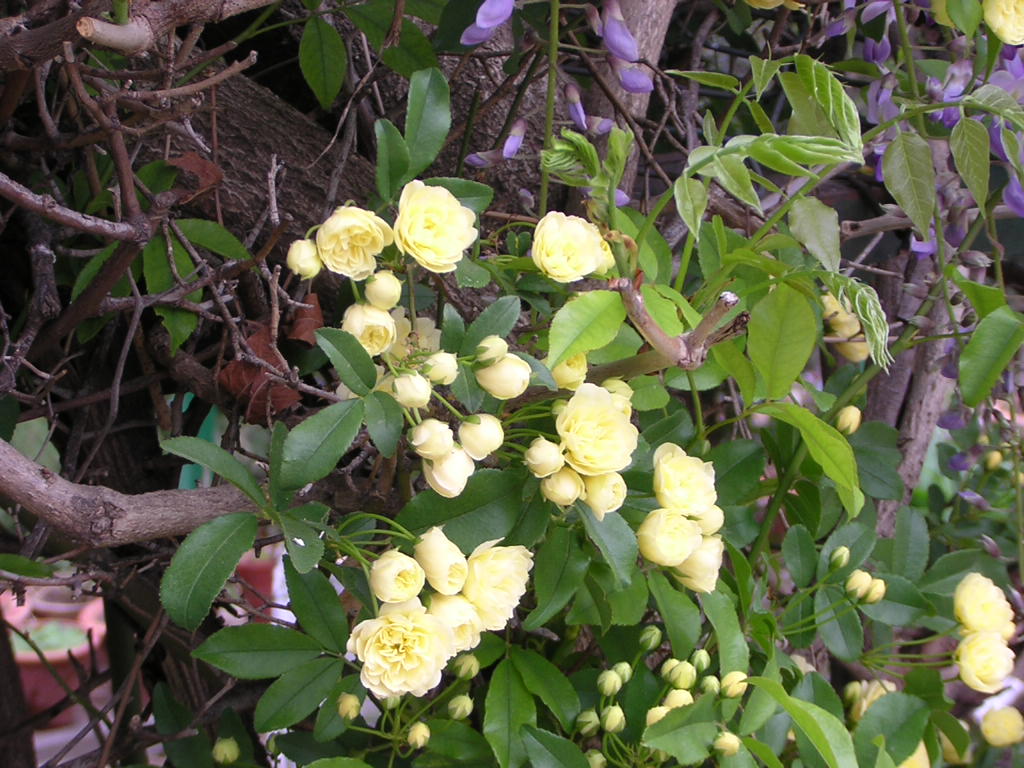
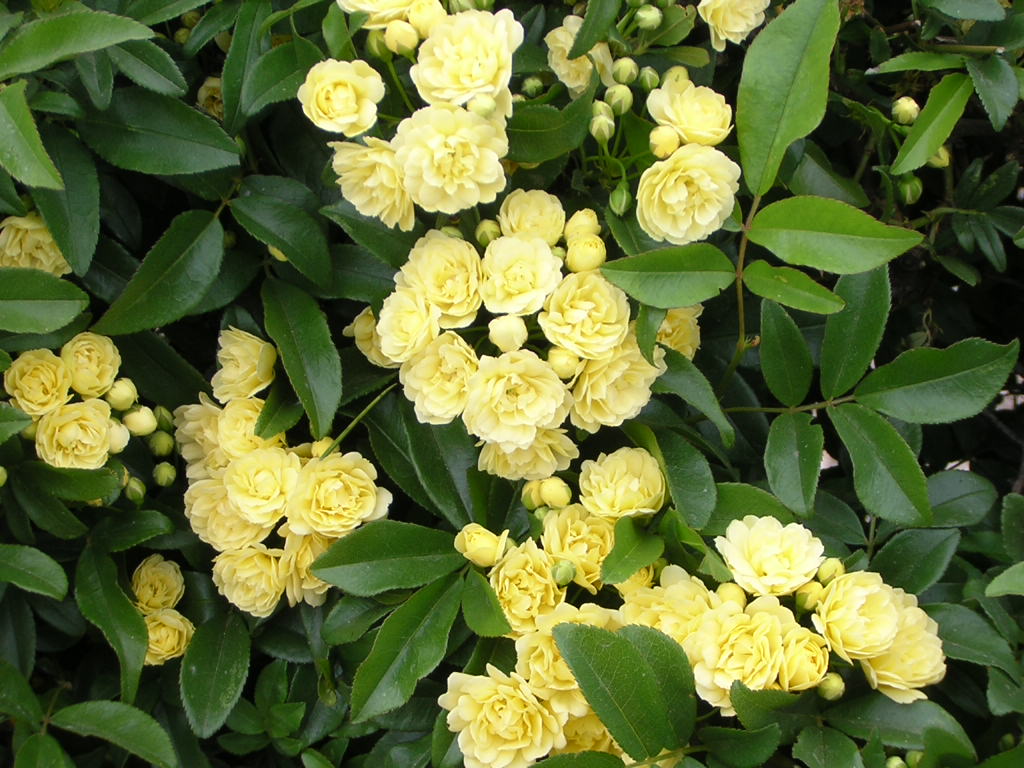
This is a species of camellia.

17 May 2006

Shimla's flowers


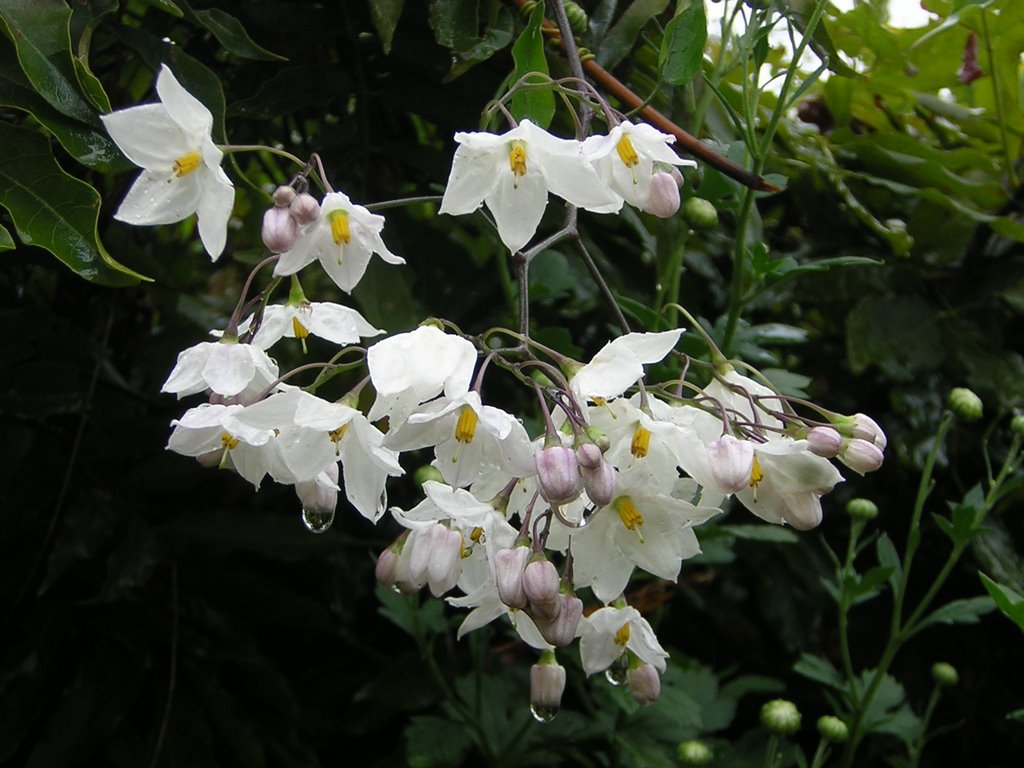
Sweet William (Solanum jasminoides Alba) Originally from Chile, this beautiful plant is a member of the Sol olanaceae family and is related to the humdrum potato and aubergine.
Thanks, Maeve, for the above information.


I am now reliably informed that this plant is not Primula veris, but a variety of camellia.
Let's keep the following poem anyway!

The primrose moments, lush with bliss,
Exhale and fade away

15 May 2006

Coming soon on this blog

The flowers of Shimla.
(As soon as the author is able to identify the flowers she has so assiduously photographed!)
Related Posts with Thumbnails